We've rebranded! Texas Premier Oasis is now Legendary Outdoor Solutions - same team, same standards, elevated identity.

Pergola vs Covered Patio in Texas: Which Fits Your Backyard Better?
In Texas, pergolas give you partial shade and a lighter, more open look, while covered patios give you stronger protection from sun and rain. Here is how to choose the better fit for your backyard, budget, and daily use.
OUTDOOR LIVING
4/13/20266 min read
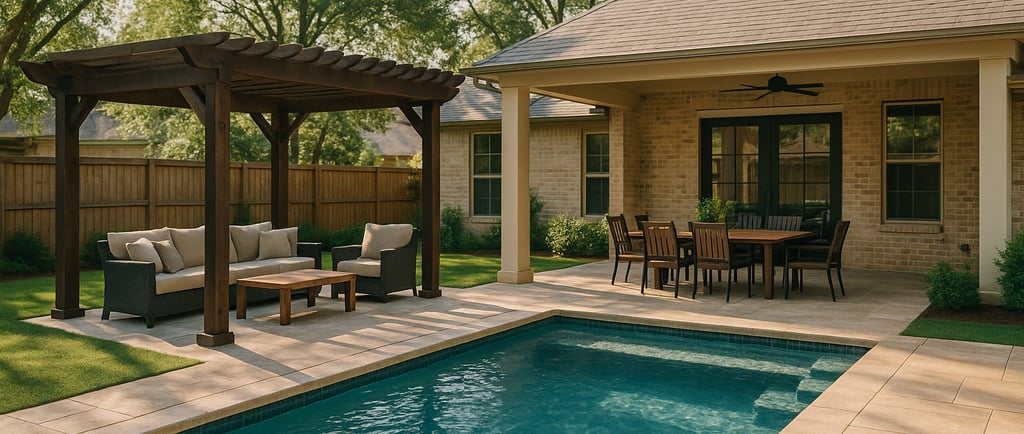
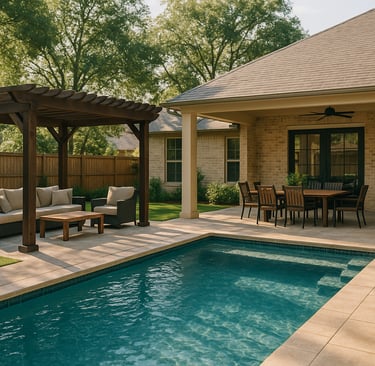
If you are deciding between a pergola vs covered patio in Texas, start with function, not looks. For most backyards, a pergola is better for an open-air lounge with partial shade. A covered patio is better for deeper shade, rain protection, and everyday dining or entertaining.
That distinction matters more in Texas than it does in milder climates. Harsh afternoon sun, sudden storms, and long outdoor seasons make the wrong choice feel obvious fast.
Quick answer: which one usually works better?
Choose a pergola if you want an airy design feature, filtered light, better airflow, and a defined place to sit near a pool, garden, or secondary patio.
Choose a covered patio if you want dependable shade, a better dining setup, protection for furniture, and a space that feels more like a true extension of the house.
For many Texas homeowners, the deciding factor is simple: if the space needs to stay comfortable at 4:00 p.m. in July, a covered patio usually wins.
Why Texas changes the comparison
This is not just a style decision in North Texas. It is a comfort decision.
A pergola can look great on paper and still leave a patio too hot to use when the sun is hitting hard from the west. A covered patio can solve that problem, but it also creates a heavier structure with a bigger footprint and usually a bigger budget.
A few Texas-specific realities shape the choice:
west-facing patios often take the hardest late-day heat
spring storms and pop-up rain make solid coverage more valuable
outdoor kitchens, TVs, and fans work better with a more substantial overhead structure
poolside lounge areas often feel better with airflow and partial sun rather than full enclosure
That is why homeowners who start with -I like pergolas better- often end up choosing a covered patio for the main living zone and using a pergola somewhere else in the yard.
What a pergola does well
Pergolas are strongest when the goal is atmosphere, separation, and a lighter visual feel.
A pergola usually makes sense when you want to:
frame a seating area without boxing it in
create a poolside retreat for chaise lounges or a conversation set
add architectural interest to a plain patio or backyard corner
keep more natural light and airflow moving through the space
start with a simpler structure and decide later whether to add shade accessories
Trex describes pergolas as structures that add architectural interest while providing shade and privacy, and it also highlights canopy add-ons. That matters because a pergola does not have to stay fully open forever. A canopy can improve shade, but it still does not turn the structure into a true solid-roof patio cover.
A real-world example: if you have a pool with a tanning ledge and want two loungers plus a small drink table nearby, a pergola can define that area nicely without making it feel dark or closed off.
Where pergolas fall short
The same openness that makes a pergola attractive is also its main limitation.
Traditional pergolas provide filtered shade, not full weather protection. This Old House notes pergolas as slatted roof structures with large gaps between beams, which is exactly why they feel airy and exactly why they do less for rain and midday heat.
That tradeoff shows up quickly when:
the patio is exposed to direct afternoon sun
you want to leave cushions or electronics in place
the space doubles as your main outdoor dining area
you need cover for cooking, serving, or hosting during mixed weather
If the backyard only has room for one major overhead structure, those limitations matter.
What a covered patio does better
A covered patio is usually the better answer for primary use space.
Covered patios work especially well when you want:
a dining table that stays usable through most of the year
stronger protection for guests, furniture, and flooring
a better setup for fans, recessed lighting, speakers, or a TV
a natural transition off the back door
a patio that feels built into the home instead of placed beside it
This is the option that makes the most sense for families who actually eat outside, host birthday parties, watch games outdoors, or want a shaded place to sit after work without chasing the sun around the yard.
A straightforward example: if the goal is a table for six, a ceiling fan, grill access, and reliable evening shade behind a brick house in Forney, a covered patio is usually the more useful build.
The tradeoffs with a covered patio
More coverage usually means more structure, more cost, and a stronger visual presence.
Covered patios tend to cost more than basic pergolas, and they can feel heavier in the yard if the proportions are not handled well. They also need better planning for drainage, roof tie-ins, and ceiling height so the space does not feel too dark or trap heat.
That does not make them the wrong choice. It just means the upside is comfort and shelter, while the tradeoff is a larger project.
Budget differences homeowners should expect
The price gap is real, but it can narrow faster than people expect.
This Old House lists broad national planning ranges of about $4,000 to $15,000 for a pergola, $10,000 to $25,000 for a louvered roof, and $13,000 to $30,000 for a gable-style patio roof. Local pricing in Texas can move up or down based on design, size, materials, and labor, but the pattern is still useful.
Here is the practical takeaway:
a basic pergola often starts lower
a motorized or upgraded pergola can climb quickly
a solid covered patio usually starts higher but solves more daily-use problems
a louvered pergola often lands in the middle or overlaps with covered-patio budgets
So the cheapest option is not always the best value. If you know you need real shade and rain protection, paying less for a basic pergola can turn into paying twice.
Best fit by backyard scenario
Matching the structure to the zone is usually the smartest move.
Pergola is often the better fit for:
a pool lounge area
a garden seating nook
a second destination space deeper in the yard
a patio that needs style more than shelter
homeowners who want some sun to keep coming through
Covered patio is often the better fit for:
the main patio directly behind the home
outdoor dining areas
outdoor kitchens and grill zones
patios that need fans, lighting, or media features
west-facing backyards that get hammered by late-day heat
Both can make sense when:
the yard is large enough for separate activity zones
you want a covered patio for dining and a pergola for lounging
the project includes a pool, kitchen, or expanded hardscape plan
That combination is common in higher-end backyard layouts because each structure does a different job well.
What about louvered pergolas?
This is the in-between option for homeowners who like flexibility.
A louvered pergola gives you adjustable slats instead of a fully open top or a fixed solid roof. That can be a strong solution when you want more sun control than a standard pergola but do not want the look of a traditional covered patio.
The tradeoffs are straightforward:
more flexibility than a fixed pergola
more moving parts and usually a higher budget
cleaner modern appearance
less of a budget-friendly option than a simple wood pergola
For some Texas backyards, that is the sweet spot. For others, it is an expensive middle ground that still does not replace the shelter of a full covered patio.
Forney planning and permit details
Outdoor structures should be planned like real construction projects, not casual add-ons.
The City of Forney states that building permits must be obtained before making improvements or alterations to a property, and it routes permits, fees, contractor registration, and project status through MyGov.
That matters for pergolas and covered patios alike, especially when the design includes:
attachment to the house
electrical work
larger structural spans
drainage changes
HOA review requirements
Before building, it is smart to confirm whether the structure is attached or freestanding, whether electrical is part of the project, and what drawings or inspections may be required. A contractor who handles those details well will save you headaches later.
Bottom line
A pergola is usually the better choice in Texas when you want an open-air feature, filtered shade, and a lighter backyard look. A covered patio is usually the better choice when you want dependable comfort, stronger weather protection, and a space your family will use week after week.
If you only have room or budget for one main structure, pick the one that matches the way you will actually use the yard, not the one that only looks best in a photo.
Schedule a consultation today if you want help planning a pergola, covered patio, or full backyard layout that fits your home, your sun exposure, and the way you want to use the space.
(214) - 557 - 7809
© 2025. All rights reserved.
Call or Text
Inquire
Office Hours
Monday - Friday 8am-6pm
Saturday 8am-12pm
Transforming your backyard into a stunning oasis. We specialize in custom builds, including patios, pergolas, shops, and pools. As a turnkey solution, we manage every aspect of your project—from initial planning and permit pulling to the completed end product.
With years of experience, we pride ourselves on professionalism and reliability, delivering top-quality grading, excavating, and concrete work—done right the first time.
Your satisfaction is our priority! Get a Free Estimate today to start creating your perfect outdoor space!
Legendary Outdoor Solutions: