We've rebranded! Texas Premier Oasis is now Legendary Outdoor Solutions - same team, same standards, elevated identity.

Covered Outdoor Kitchen Ideas for Texas Backyards
Smart covered outdoor kitchen ideas for Texas backyards, including roof styles, grill placement, materials, drainage, ventilation, and Forney-area planning details.
OUTDOOR KITCHENS
5/19/20266 min read
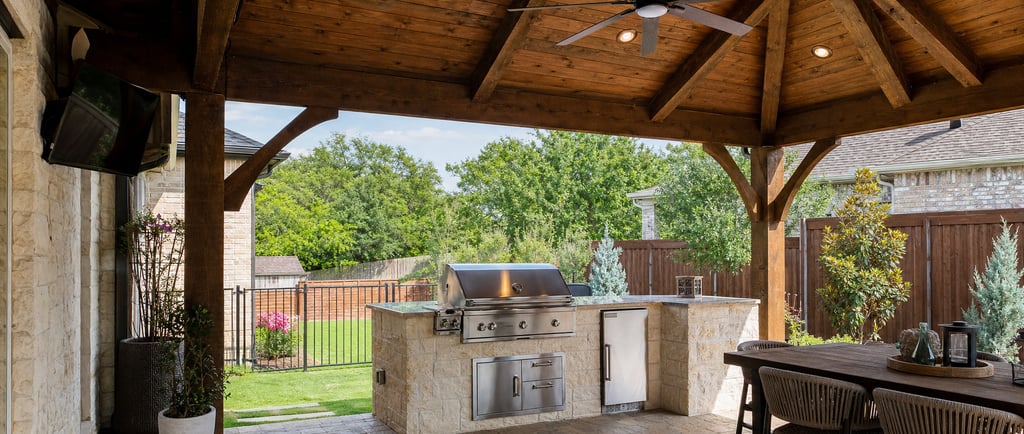
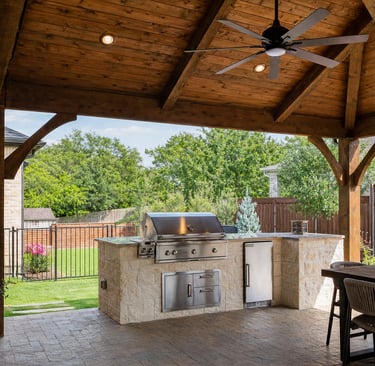
Covered outdoor kitchen ideas for Texas backyards should start with shade, airflow, durable materials, and a layout that keeps cooking smoke, guests, utilities, and drainage in the right places. In Forney and across North Texas, the best designs are not just pretty grill stations under a roof — they are outdoor rooms built for heat, wind, clay soil, sudden rain, and real weekend use.
A covered outdoor kitchen can be simple, like a straight stone grill island under an existing patio cover, or it can become a full backyard hub with a roof extension, sink, refrigerator, bar seating, lighting, fans, and storage. The right version depends on how often you cook outside, how much shade your yard already has, and whether the project needs gas, plumbing, electrical, drainage, or structural work.
Start with the cover before the cabinets
Texas sun changes the whole design. A kitchen that looks good in March can feel unusable in July if the grill, prep counter, and seating are exposed to west-facing heat. For most backyards, the cover should be planned before the island layout because the roof controls comfort, smoke movement, lighting, fan placement, and how rainwater leaves the space.
Common covered outdoor kitchen approaches include:
An attached patio cover that extends from the house and keeps the kitchen close to the indoor kitchen
A freestanding pavilion that creates a destination space away from the house
A pergola-style cover for filtered shade where full rain protection is less important
A gable roof for better height, airflow, and a more finished outdoor-room feel
A lean-to roof for tighter side yards or simpler patio extensions
The biggest tradeoff is cost versus comfort. A full framed roof usually costs more than a pergola, but it gives better rain protection, easier fan and lighting placement, and a more usable cooking area during Texas summers.
Five layout ideas that work well in North Texas yards
1. Straight-run kitchen under an existing patio cover
This is often the most practical starting point. The grill, storage, trash pullout, and counter space sit in one clean line along the back patio. It works well for narrower yards, smaller patios, and homeowners who want a polished cooking area without rebuilding the whole backyard.
The key is landing space. A built-in grill needs usable counter area nearby for trays, utensils, seasonings, and cooked food. If every inch is packed with appliances, the kitchen may look expensive but cook poorly.
2. L-shaped kitchen with a serving return
An L-shaped outdoor kitchen gives you a stronger hosting setup. One leg can hold the hot zone — grill, griddle, side burner, or smoker — while the return creates prep space or bar seating. This layout is especially useful when the covered area opens toward a pool, lawn, or fire feature.
For family gatherings, the L-shape helps keep guests close without putting them directly behind the cook. That matters more than people think once the grill lid is open and everyone is moving through the same patio space.
3. Pavilion kitchen with a dining table nearby
A freestanding pavilion can turn an unused corner of the yard into a full outdoor room. This works well when the house patio is too small, the roofline is difficult to tie into, or the best shade and view are away from the back door.
Plan the utilities early. Gas, electrical, and water lines get more complicated as the kitchen moves farther from the house. The pavilion also needs solid footings, drainage planning, and a walking path that makes sense after dark.
4. Covered kitchen plus bar seating
A bar-height counter can make the kitchen feel social instead of tucked away. It gives guests a place to sit, snack, and talk while food is being prepared. In Texas heat, though, bar seating needs shade and airflow. A fan above the seating zone often does more for comfort than adding another decorative feature.
Leave enough room behind stools so people can pass without squeezing between guests and the patio edge. Tight seating looks fine in a drawing but becomes irritating during a cookout.
5. Compact kitchen with a high-quality grill and storage
Not every backyard needs a giant island. A compact covered kitchen with a built-in grill, two storage doors, a trash space, and durable counter can be the smartest choice for smaller Forney lots. It keeps the budget focused on the parts that matter: structure, shade, ventilation, materials, and workmanship.
A smaller kitchen also leaves more patio room for seating, kids, pets, and foot traffic. Bigger is not automatically better if the island starts crowding the backyard.
Materials that hold up better in Texas weather
Outdoor kitchens in North Texas need materials that can handle sun exposure, wind-driven rain, temperature swings, and soil movement around the patio. Good material choices reduce maintenance and keep the kitchen from looking worn out after a few seasons.
Strong options include:
Stone, brick, or stucco veneer over a properly built outdoor-rated frame
Concrete, granite, porcelain, or other exterior-rated countertop materials
Stainless steel doors, drawers, vents, and appliance components
Cedar or properly protected framing elements for visible patio-cover details
Pavers or concrete flatwork with slope planned away from the house and kitchen
The caution is moisture. Outdoor kitchens need drainage and ventilation, not just attractive finishes. Water should not collect under cabinets, against the house, or around post bases. Gas grill islands also need proper venting so trapped gas does not build up inside enclosed spaces.
What drives the cost the most
Covered outdoor kitchen cost usually rises because of structure, utilities, appliances, and finish materials. The grill island itself matters, but the roof and utility work often have the biggest impact.
Major cost drivers include:
Building a new patio cover, pavilion, or roof extension
Running gas, electrical, or plumbing to the cooking area
Adding a sink, refrigerator, ice maker, lighting, outlets, fans, or heaters
Choosing stone, brick, premium counters, or custom masonry details
Preparing the patio base, drainage, footings, or slab for the new load
Working around pools, fences, easements, setbacks, or HOA requirements
A homeowner trying to control budget should decide first whether the kitchen needs plumbing. A sink is convenient, but it can add supply, drain, inspection, and winterization considerations. For many families, a great grill, storage, counter space, lighting, and shade deliver more value than squeezing in every possible appliance.
Do not ignore smoke, wind, and heat
A covered kitchen needs breathing room. Grill placement should account for prevailing wind, roof height, nearby windows, ceiling material, and where guests will sit. If smoke rolls under the cover and toward the seating area, the kitchen will feel poorly designed even if the finishes are beautiful.
Practical planning details include:
Keep the grill away from low ceilings, combustible materials, and tight corners
Use vent panels in enclosed grill islands where gas equipment is installed
Consider a vent hood when the grill sits under a more enclosed roof condition
Avoid placing the main seating area directly behind the grill
Add fans where they help people, but do not aim them in a way that disrupts the grill flame or pushes smoke into the house
This is where a professional layout review is valuable. The question is not only, -Will the grill fit?- It is, -Will this kitchen cook safely and comfortably under this cover?-
Permits, HOA rules, and local planning realities
Covered outdoor kitchens can trigger more than one approval path. A simple appliance swap is different from a new roof structure, gas line, electrical work, plumbing, or masonry kitchen tied into a patio cover. In Forney, Terrell, Kaufman County, and nearby communities, requirements can vary by city, utility, subdivision, and HOA.
Before construction, homeowners should expect to confirm:
Whether the patio cover or pavilion needs a building permit
Setbacks from property lines and easements
HOA approval for rooflines, materials, height, and visibility
Electrical requirements for outlets, lights, fans, refrigerators, and appliances
Gas or plumbing requirements if adding a built-in grill, sink, or utility line
Drainage plans so runoff does not create problems for the house or neighbor
Legendary Outdoor Solutions can help homeowners think through these items early so the design is not derailed after materials are chosen.
A practical planning checklist
Before choosing finishes, answer these questions:
Will the kitchen be used mostly for weeknight grilling, big gatherings, or both?
Does the yard need full rain coverage or mainly shade?
Where is the afternoon sun strongest?
Where will smoke go when the grill is running?
How many people need to sit or move through the space?
Does the design need gas, water, drain, electrical, or only a grill and storage?
Will the patio need more concrete, pavers, drainage work, or retaining support?
Are there HOA rules, easements, pool barriers, or setback limits to check?
Which materials match the house without feeling forced?
The best covered outdoor kitchen ideas are the ones that survive this checklist. A beautiful rendering is useful, but a backyard that cooks well, drains well, and stays comfortable in August is what homeowners actually enjoy.
What Legendary Outdoor Solutions recommends
For most Texas backyards, start with a covered layout that protects the cook, gives guests shade, and keeps the grill in a safe, ventilated position. Then build the kitchen around a few high-value features: a quality grill, durable counter space, storage, lighting, and enough room to serve food without crowding the patio.
If the budget allows, add the upgrades that improve daily use first — fans, lighting, trash storage, a clean serving counter, and smart drainage. Luxury appliances can come later, but shade, airflow, utility planning, and solid construction need to be right from the beginning.
Legendary Outdoor Solutions designs and builds outdoor living spaces for Texas homeowners who want the backyard to feel finished, comfortable, and built for the way their family actually lives. If you are planning a covered outdoor kitchen in Forney, Terrell, or the surrounding North Texas area, start with the structure, the layout, and the practical details. The good-looking finishes work best when the bones of the project are right.
(214) - 557 - 7809
© 2025. All rights reserved.
Call or Text
Inquire
Office Hours
Monday - Friday 8am-6pm
Saturday 8am-12pm
Transforming your backyard into a stunning oasis. We specialize in custom builds, including patios, pergolas, shops, and pools. As a turnkey solution, we manage every aspect of your project—from initial planning and permit pulling to the completed end product.
With years of experience, we pride ourselves on professionalism and reliability, delivering top-quality grading, excavating, and concrete work—done right the first time.
Your satisfaction is our priority! Get a Free Estimate today to start creating your perfect outdoor space!
Legendary Outdoor Solutions: