We've rebranded! Texas Premier Oasis is now Legendary Outdoor Solutions - same team, same standards, elevated identity.

Best Patio Material for Texas Heat
For most Texas backyards, light-colored pavers are the best patio material. Compare pavers, travertine, porcelain, and concrete for heat, repairs, drainage, and budget.
OUTDOOR LIVING
4/18/20265 min read
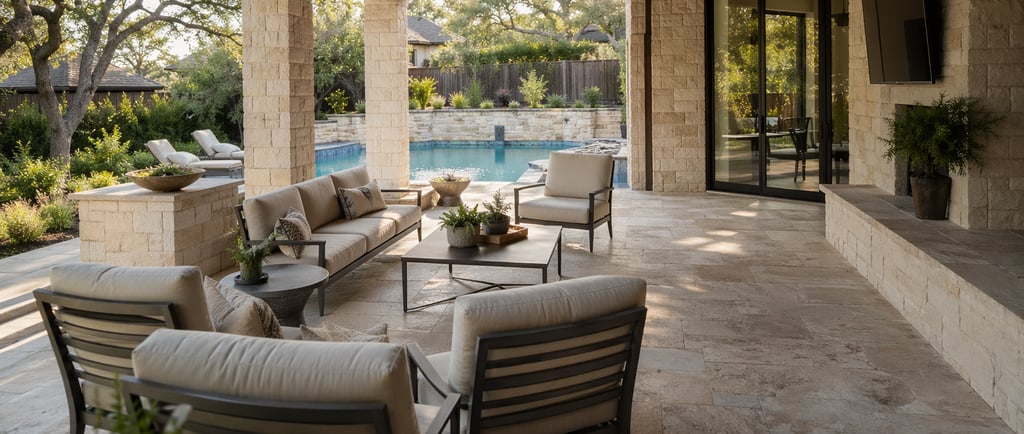
The best patio material for Texas heat is usually a light-colored paver patio. For most homeowners, it gives the best mix of summer comfort, easier repairs, better drainage flexibility, and a finish that holds up well in North Texas yards. Travertine is a strong upgrade when premium appearance and barefoot comfort matter most. Light concrete can still be the right call when budget leads, but it usually ranks behind pavers for full-sun Texas patios.
Best overall for most Texas patios
Light-colored concrete pavers are usually the safest all-around choice because they solve several homeowner problems at once.
They work well when you want:
a patio that feels less harsh in direct summer sun than darker surfaces
a surface that can be repaired one section at a time if settling shows up later
more layout flexibility around curves, steps, drains, flower beds, pool edges, or pergola posts
a finished look that feels more custom than a basic slab without jumping straight to premium natural stone pricing
That repair point matters in North Texas. Clay-heavy soil, fast rain, and long dry periods can all show up in the way a patio moves over time. When one corner of a slab settles, the repair is usually obvious. When one section of pavers shifts, the fix is usually more contained.
When travertine is worth the extra money
Travertine makes the most sense when the patio is supposed to feel high-end, barefoot-friendly, and tied into a bigger outdoor living plan.
It is often a strong fit for:
pool decks and tanning areas
lounge spaces where people walk barefoot often
patios built for entertaining rather than just basic utility
backyards where the homeowner wants a lighter, more finished natural-stone look
The tradeoff is not just material cost. Travertine usually deserves a better overall project around it. If the yard still needs drainage correction, grading work, or other structural cleanup, it is usually smarter to solve those issues before paying for a premium surface.
Where porcelain fits better than many homeowners expect
Porcelain pavers are a practical premium option when the homeowner wants a cleaner, more modern look and lower-maintenance performance.
They are especially appealing for outdoor kitchens, dining patios, and cleaner-lined backyards because they offer:
a nonporous surface that is easier to keep clean around food and grease
good stain resistance
traction options that work well for exposed patios and pool areas
a premium finish without looking rustic or overly textured
Porcelain is not usually the budget choice. It tends to cost more than standard concrete pavers, so it works best when finish quality, cleanup, and long-term appearance matter enough to justify the higher price.
When concrete still makes sense
Concrete is not the wrong answer. It is just the answer that depends most on realistic expectations.
A light broom-finish concrete patio can still be a smart choice when:
the homeowner wants more square footage for less upfront cost
the patio is meant to be functional first, not the showpiece of the yard
color and finish are chosen carefully enough to avoid building a heat trap
Concrete gets weaker in comparison when the homeowner wants easy future repairs, tighter custom detailing, or the best odds of hiding movement over time. Control joints help manage cracking, but they do not make a slab immune to cracking. If one section stains, shifts, or breaks, the repair usually shows.
A practical example is a basic grill-and-table patio behind the house. If the goal is clean usable space on a tighter budget, light concrete can be the right fit. If the goal is a long-term outdoor living area with custom borders, steps, and a future cover, pavers usually make more sense.
What usually makes a patio feel too hot
The worst patios in Texas are not always made from the worst materials. Often, they are made from the wrong combination of color, exposure, and layout.
Patios usually become hard to live with when they have:
dark gray, charcoal, or brown surfaces in wide-open sun
no shade strategy for west-facing afternoon exposure
large unbroken areas that reflect heat back toward seating
poor drainage that leaves puddles, staining, or muddy edges after storms
a material choice based only on a sample board instead of how the family will actually use the space
That is why a lighter concrete patio can outperform a darker decorative patio, and why a lighter paver system often feels like the more forgiving choice in real-world summer use.
Drainage and soil movement matter almost as much as heat
In Forney and nearby North Texas neighborhoods, the best patio surface is only part of the answer. The base, slope, and water movement matter almost as much.
Drainage-conscious paver systems are useful in yards that puddle, collect runoff near the house, or need to move water more intentionally. Permeable paver systems are not necessary for every patio, but the larger lesson is important: water needs to be managed on purpose.
This is one reason pavers often outperform basic slabs over time. The system gives more flexibility when drainage details and minor movement have to be corrected later.
Quick pick by homeowner priority
If you want the shortest practical recommendation, use this framework:
Best overall for most Texas homes: light-colored concrete pavers
Best premium choice for barefoot comfort and appearance: travertine
Best premium low-maintenance choice: porcelain pavers
Best budget-first option on a simple layout: light-colored broom-finish concrete
Worst fit in many backyards: dark patio surfaces in full Texas sun with no shade plan
What changes in Forney and North Texas
Local conditions should influence the decision.
In this part of Texas, patios have to deal with:
long afternoon sun, especially on west-facing backyards
clay-heavy soils that can move through wet and dry cycles
sudden rain that exposes weak slope and drainage planning
outdoor living layouts that often tie into pergolas, covered patios, flower beds, steps, or retaining needs
For many homes around Forney, the smartest answer is a lighter patio material paired with a real shade and drainage plan. A cooler-looking surface alone will not fully solve a patio that gets hammered by late-day sun and sheds water toward the house.
Permits and planning still matter
Forney states that building permits must be obtained before improvements or alterations to a property, and that permits, contractor registration, fees, and project status are handled through MyGov. Not every patio project follows the exact same path, but it is a good reminder to treat patio work like real construction when it ties into grading, drainage changes, structures, or electrical work.
That matters because the best patio material is not always the best patio plan. Surface choice, slope, runoff, shade, and the rest of the backyard need to work together.
Our recommendation
If a homeowner asks us for one answer, we usually point them to light-colored pavers first.
They are the most balanced option for Texas heat, North Texas soil movement, future repairs, and everyday backyard use. Travertine is the best upgrade when the goal is a premium outdoor living space with better barefoot comfort and a more finished natural look. Porcelain is strong when the homeowner wants a cleaner, easier-to-maintain premium finish. Concrete still has a place, especially for simpler patios and tighter budgets, but it usually needs the most realistic expectations.
The right patio should match how your yard drains, how much sun it gets, and whether the space is meant for quick utility or daily living. That is what usually separates a patio that only looks good on install day from one that still feels right after a few Texas summers.
Legendary Outdoor Solutions can help you compare pavers, travertine, porcelain, and concrete based on your actual yard, not just a generic material list.
(214) - 557 - 7809
© 2025. All rights reserved.
Call or Text
Inquire
Office Hours
Monday - Friday 8am-6pm
Saturday 8am-12pm
Transforming your backyard into a stunning oasis. We specialize in custom builds, including patios, pergolas, shops, and pools. As a turnkey solution, we manage every aspect of your project—from initial planning and permit pulling to the completed end product.
With years of experience, we pride ourselves on professionalism and reliability, delivering top-quality grading, excavating, and concrete work—done right the first time.
Your satisfaction is our priority! Get a Free Estimate today to start creating your perfect outdoor space!
Legendary Outdoor Solutions: