We've rebranded! Texas Premier Oasis is now Legendary Outdoor Solutions - same team, same standards, elevated identity.

Best Low Maintenance Shrubs for North Texas Landscaping
The best low maintenance shrubs for North Texas landscaping are heat-tolerant, drought-adapted, and sized correctly for the bed. Here are practical choices for Forney-area homeowners and the planning details that keep them easier to maintain.
5/19/20265 min read
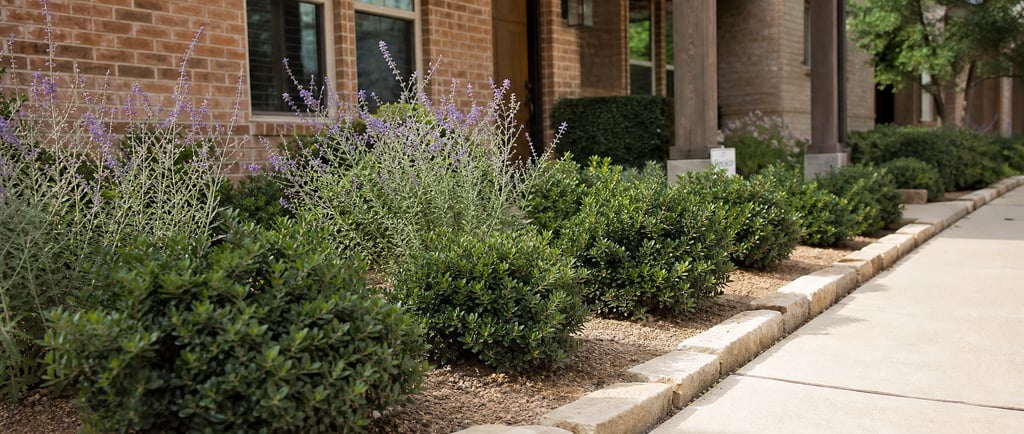
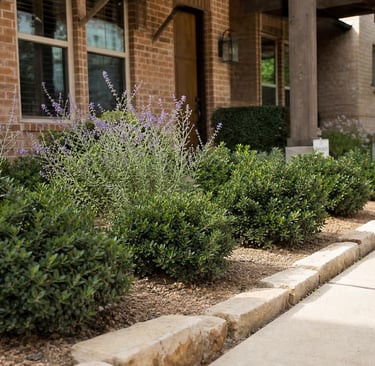
The best low maintenance shrubs for North Texas landscaping are tough, heat-tolerant plants that can handle clay soil, dry summers, sudden storms, and full sun without needing constant trimming or babying. For most Forney-area homes, the strongest choices include dwarf yaupon holly, Texas sage, abelia, dwarf Burford holly, juniper, rosemary, wax myrtle, and compact native or adapted shrubs that fit the bed before they outgrow it.
Low maintenance does not mean no maintenance. It means the shrub is matched to the sun, soil, bed size, drainage, and irrigation plan so it can settle in and perform without becoming a weekly chore.
Best all-around shrubs for North Texas homes
A good shrub list for North Texas should include more than pretty plants. The shrubs need to survive August heat, tolerate occasional hard freezes, recover from pruning, and avoid constant pest or disease problems.
Dwarf yaupon holly: One of the most useful evergreen shrubs for foundation beds, borders, and clean front-yard structure. It stays compact when chosen correctly, handles heat well, and does not need aggressive shaping.
Texas sage: A strong choice for sunny, dry areas. It brings silver-green foliage and purple blooms after humidity or rain, but it needs room and good drainage instead of a tight, overwatered bed.
Abelia: A softer-looking shrub with a long bloom season and reliable performance in many North Texas landscapes. It works well where homeowners want movement and color without a fussy plant.
Dwarf Burford holly: Durable, evergreen, and useful for screening or heavier structure. It is low maintenance when spaced properly, but it becomes more work if planted too close to walks, windows, or driveways.
Juniper: Good for hot, open beds and low-water designs. It needs drainage and enough sunlight; crowded, wet areas can make it struggle.
Rosemary: A practical evergreen herb-shrub for sunny beds with excellent drainage. It dislikes wet feet, so it fits raised or amended beds better than soggy low spots.
Wax myrtle: Useful for screening and a more natural look. It can grow larger than homeowners expect, so it belongs where there is enough space.
Flame acanthus or autumn sage: Better for color and pollinator value than formal structure. These work nicely in layered beds where seasonal blooms are part of the plan.
Match the shrub to the job, not just the label
The word -low maintenance- gets overused. A shrub can be drought tolerant and still be a poor choice if it is planted under a roof valley, jammed against the house, or placed in sticky clay with no bed preparation.
For a front foundation bed, compact evergreen shrubs usually make the most sense because they give the house year-round structure. For a sunny side yard, Texas sage, juniper, rosemary, and native flowering shrubs can reduce watering once established. For a backyard border, wax myrtle, abelia, and mixed native plantings can soften a fence line without making the space feel overbuilt.
The right question is not only -Will this shrub survive?- It is -Will this shrub still look good here three years from now?-
North Texas conditions that change the decision
Forney, Terrell, and the wider North Texas area can be rough on ornamental landscaping. Heavy clay soil may hold water after storms, then bake hard during dry periods. Summer heat can punish shallow-rooted plants. New subdivisions may also have compacted soil, construction debris, grading issues, or drainage patterns that push water into the wrong place.
Before choosing shrubs, pay attention to:
How many hours of direct sun the bed receives
Whether roof runoff dumps into the planting area
If the soil stays soggy after rain
How close the shrubs will be to windows, walkways, meters, and AC units
Whether the bed has drip irrigation or only sprinkler overspray
How large each shrub will be at maturity, not just the nursery size
A low maintenance landscape starts with solving those site conditions. Plant selection comes next.
Best shrubs by homeowner goal
If you want a clean, tidy front bed, use dwarf yaupon holly, compact holly varieties, abelia, and ornamental grasses in measured groups. This gives the home a finished look without relying on constant seasonal color changes.
If you want lower watering, lean toward Texas sage, rosemary, juniper, dwarf yaupon, and other drought-adapted shrubs once the plants are established. Add mulch and drip irrigation so water reaches the roots instead of evaporating off the surface.
If you want privacy or screening, consider wax myrtle or larger hollies where space allows. Avoid planting large shrubs in narrow beds just because they look small at the nursery. That shortcut often turns into years of hard pruning.
If you want blooms and pollinator activity, mix in autumn sage, flame acanthus, abelia, or other flowering shrubs that tolerate Texas heat. These may look more seasonal and less formal, which is a good thing when the design calls for movement instead of a clipped hedge.
What usually makes shrub beds harder to maintain
Most maintenance problems come from design mistakes, not bad luck. The shrub may be fine, but the layout forces it to fight the site.
Common issues include:
Planting full-size shrubs where compact varieties were needed
Putting drought-tolerant shrubs in poorly drained beds
Mixing high-water and low-water plants on the same irrigation zone
Leaving bare soil exposed to weeds and heat
Planting too close together for an instant full look
Using rock in a way that reflects too much heat onto sensitive plants
Relying on overhead spray instead of drip irrigation in shrub beds
A bed that looks slightly spaced on installation day often matures better than one packed tight from the start. Proper spacing is one of the quiet details that keeps a landscape from becoming overgrown and expensive to correct.
Installation details that matter
For North Texas shrub beds, the behind-the-scenes work matters as much as the plant list. Clay soil usually benefits from thoughtful bed shaping, compost or suitable amendment, mulch, and drainage awareness. If the bed is low and collects water, choosing a drought-tolerant shrub will not fix the problem by itself.
Drip irrigation is often worth considering for new shrub beds because it waters the root zone more efficiently than broad spray heads. Mulch helps moderate soil temperature, reduce weeds, and protect new roots during the establishment period. Edging keeps turf from creeping into the bed and makes maintenance cleaner.
Homeowners should also expect more care during the first growing season. Even tough shrubs need consistent watering while they establish. After that, the goal is to taper into a more durable, lower-input routine.
A practical short list for Forney-area landscapes
For most homes, Legendary Outdoor Solutions would rather build a balanced shrub palette than fill a bed with one plant repeated everywhere. A strong starting combination might include dwarf yaupon holly for structure, Texas sage or rosemary for sun and drought tolerance, abelia for softness and blooms, and a few ornamental grasses or flowering perennials for movement.
That kind of mix keeps the bed from looking flat while still staying manageable. It also gives the landscape resilience. If one plant struggles in a difficult spot, the whole bed does not fail visually.
What to avoid if you want truly low maintenance
Avoid shrubs that need constant shearing to stay off the sidewalk. Be cautious with plants that require frequent spraying, heavy fertilizing, or delicate winter protection. Skip moisture-loving shrubs in exposed, hot beds unless the irrigation and soil conditions genuinely support them.
Also avoid choosing plants only from a picture. A shrub that looks excellent in a catalog may not fit the heat, soil, drainage, or mature size constraints of a North Texas yard.
How Legendary Outdoor Solutions can help
A good shrub bed should look intentional on day one and still make sense years later. Legendary Outdoor Solutions can help homeowners choose practical shrubs, improve bed layout, address drainage concerns, install edging and mulch, and build a plant palette that fits North Texas conditions instead of fighting them.
If you want a lower-maintenance landscape around your Forney, Terrell, or North Texas home, the best next step is a site-specific plan. The right shrubs are only part of it; the spacing, soil prep, irrigation, and drainage details are what make the landscape easier to live with.
(214) - 557 - 7809
© 2025. All rights reserved.
Call or Text
Inquire
Office Hours
Monday - Friday 8am-6pm
Saturday 8am-12pm
Transforming your backyard into a stunning oasis. We specialize in custom builds, including patios, pergolas, shops, and pools. As a turnkey solution, we manage every aspect of your project—from initial planning and permit pulling to the completed end product.
With years of experience, we pride ourselves on professionalism and reliability, delivering top-quality grading, excavating, and concrete work—done right the first time.
Your satisfaction is our priority! Get a Free Estimate today to start creating your perfect outdoor space!
Legendary Outdoor Solutions: